
What Industrial Noise Means for Farm Animals — and Why It Matters Here in Warren County
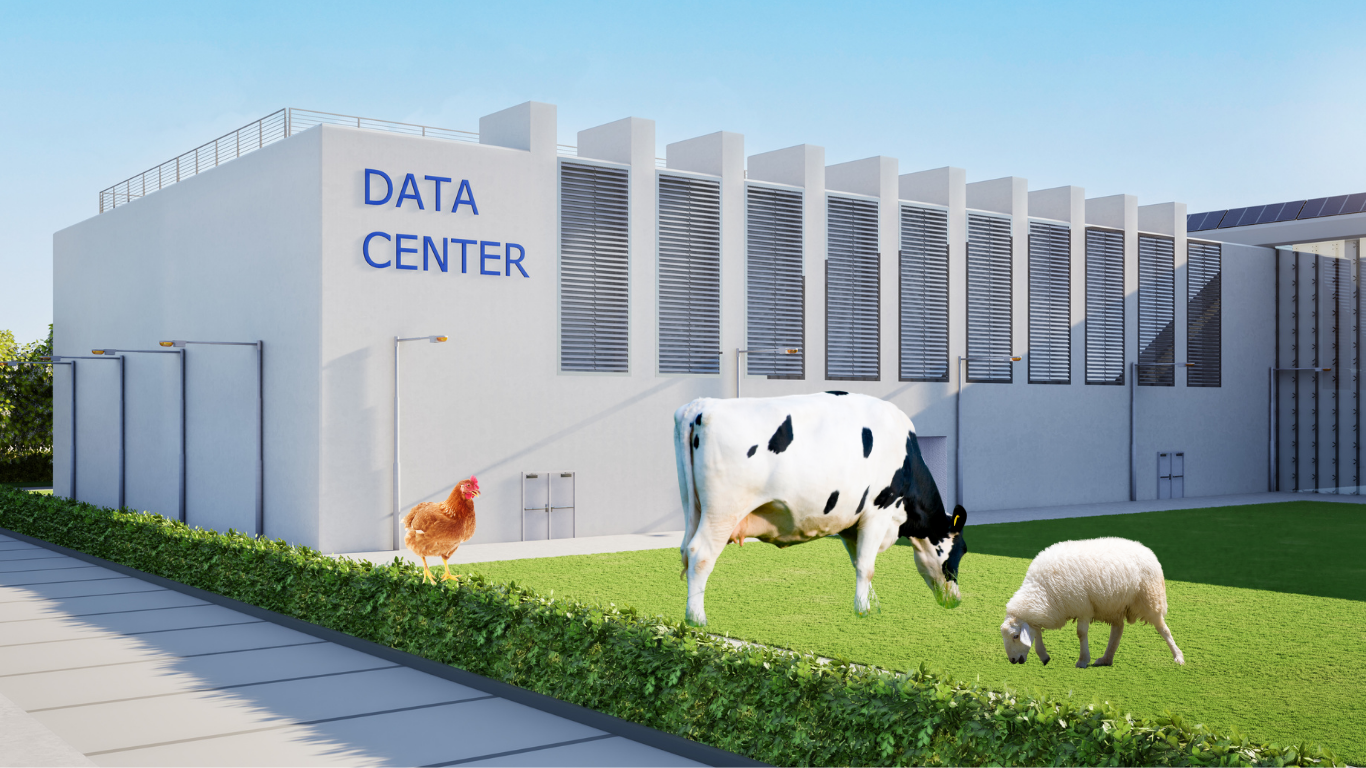
At the Tennessee Cow Rescue, our mission is simple: provide a safe, peaceful home for animals who have already been through more than most.
That peace matters more than people often realize.
Animals, especially cows, are deeply sensitive to their environment. They rely on consistency, quiet, and routine to feel safe. When those conditions change, even in subtle ways, their stress levels rise. And stress, in animals, doesn’t just affect behavior. It affects their health, their immune systems, and their overall well-being.
Recently, our community has been discussing the possibility of a large data center being built nearby. While much of the conversation has focused on development, we believe it’s also important to talk about something less visible:
What does this kind of industrial operation mean for the animals who live here?
Data centers operate 24 hours a day, 7 days a week. They rely on massive cooling systems, backup generators, and constant airflow infrastructure. The result is a continuous, low-frequency hum, one that doesn’t turn off at night and doesn’t fluctuate like traffic or weather.
For humans, that may be an annoyance.
For animals, it can be something else entirely.
Cows and other livestock are particularly sensitive to low-frequency sound and vibration. Unlike sudden noises or a short-term increase, which animals can often adapt to, constant background noise can create ongoing stress. Over time, that stress may show up as agitation, disrupted rest patterns, or changes in behavior that are difficult to trace back to a single cause.
Here, the biggest impact would be on our born blind Holstein, Faith. When they are running the combine next to us, she gets really agitated. I would see the agitation in her first, and because she relies so heavily on sound and smell, constant, low-frequency, low-level background noise would be stressful for her to manage. No one needs a blind 1500lb heifer with horns panicked and running around, and by no one, I mean me.
And noise is only part of the picture.
Large-scale data centers also require significant amounts of water and energy, resources that are already under pressure in many rural communities like ours. For those of us who live and work here, these aren’t abstract concerns. They impact our daily operations, our animals, and our long-term sustainability.
We are animal rights activists, but we are also environmentalists and conservationists. At Tennessee Cow Rescue, we believe in thoughtful growth, growth that respects the land, protects natural resources, and considers all members of the community, including those without a voice.
This isn’t about being for or against progress.
It’s about asking the right questions:
How will this impact our local water supply?
What about the environmental increase in temperature from the data center's heat output?
What does increased demand mean for an already strained power grid?
And what responsibility do we have to the animals and farmland that define this community?
Because once a rural environment changes at scale, it’s very hard to reverse it. It would be difficult for McMinnville to remain the “Nursery Capitol of the World” with no nurseries.
And for the animals, domestic, wild, and livestock, who call this place home, it could change everything.